Context
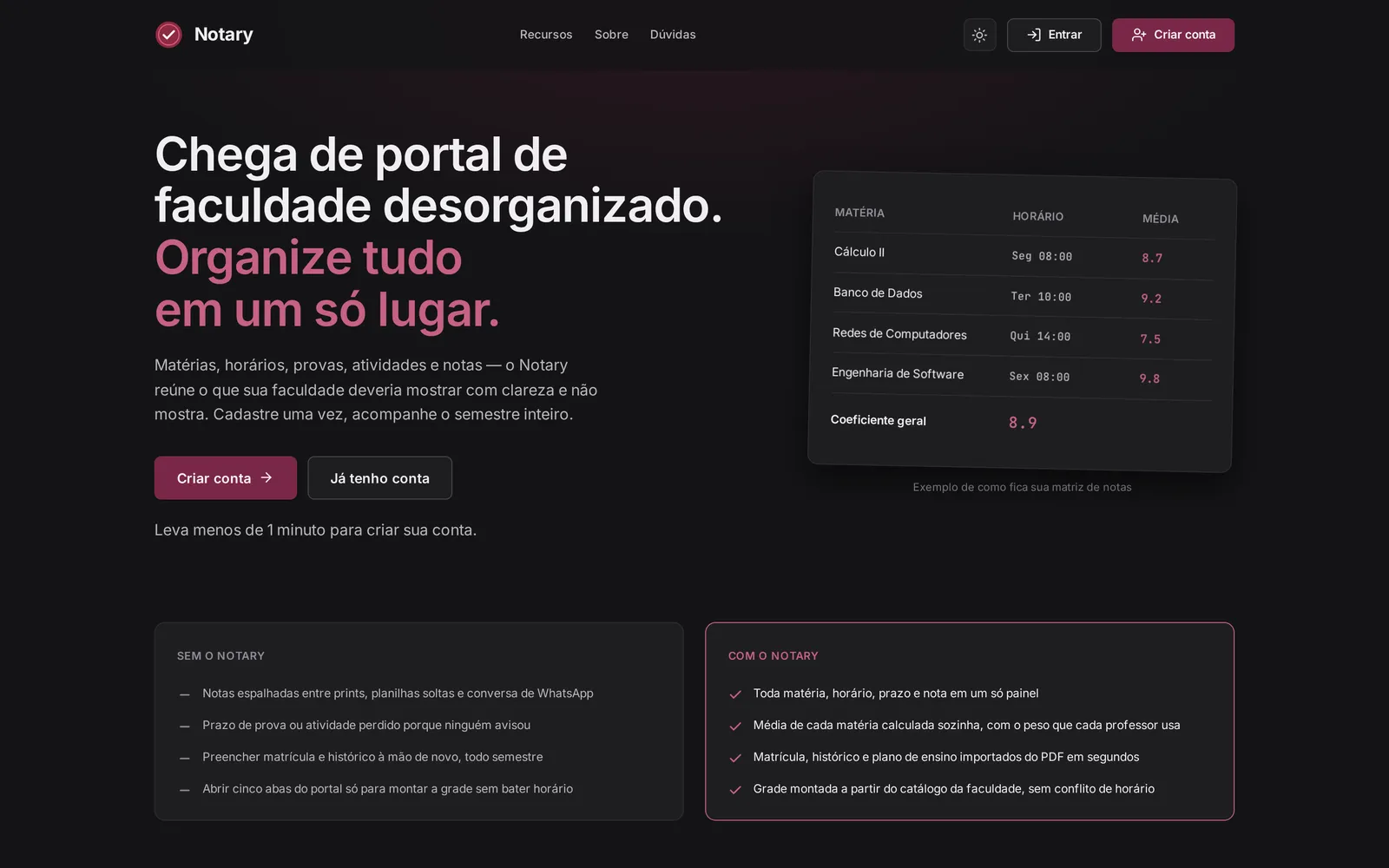
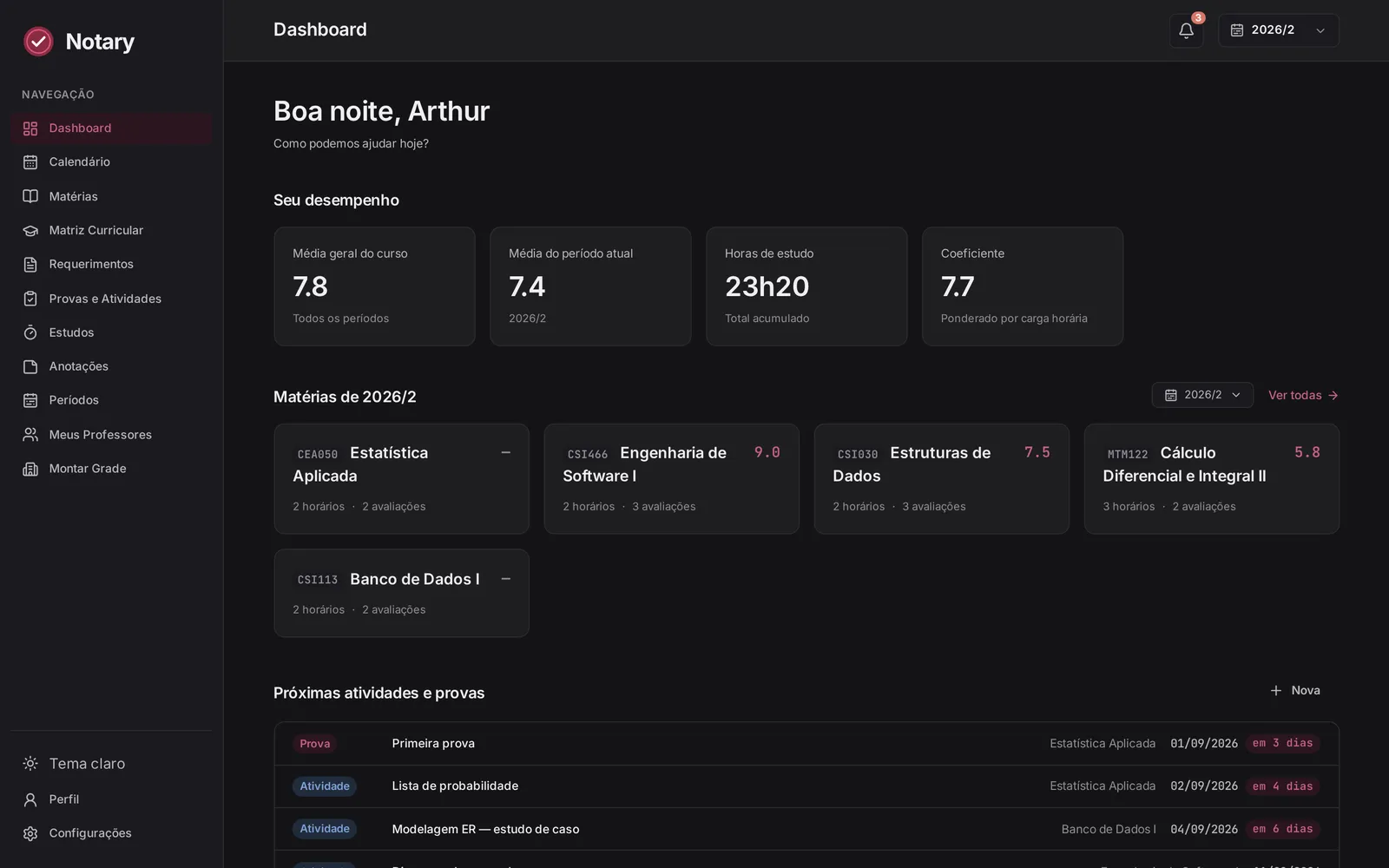
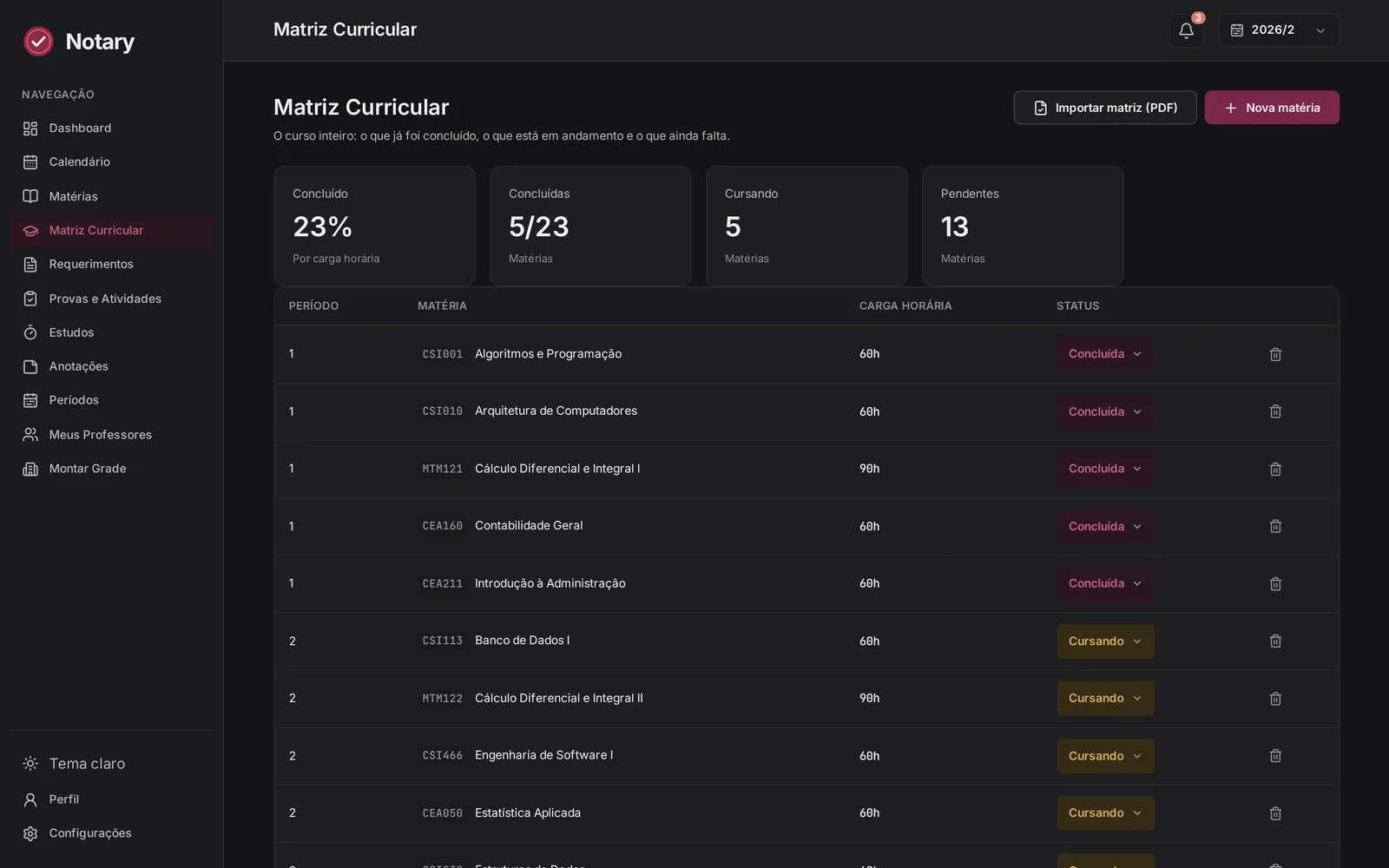
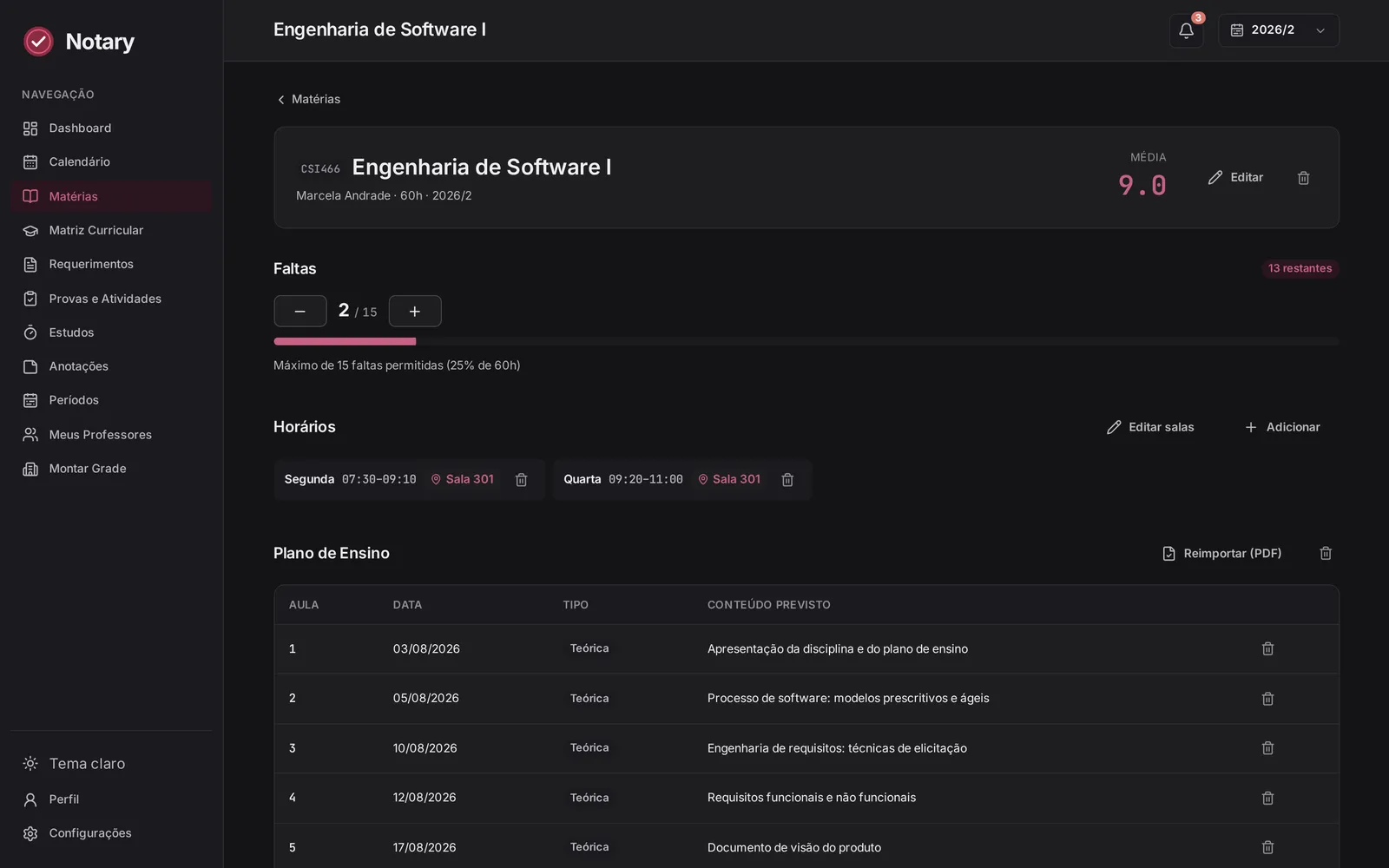
University students often keep schedules, grades, absences and documents in separate spreadsheets and PDFs. Notary brings it all into one app: courses, professors, schedules, exams, assignments, grades, absences, syllabus, curriculum matrix and requests, with averages and a grade point average weighted by course workload.
My role
I built the project end to end, on my own, on both the front end and the back end.
Technical decisions
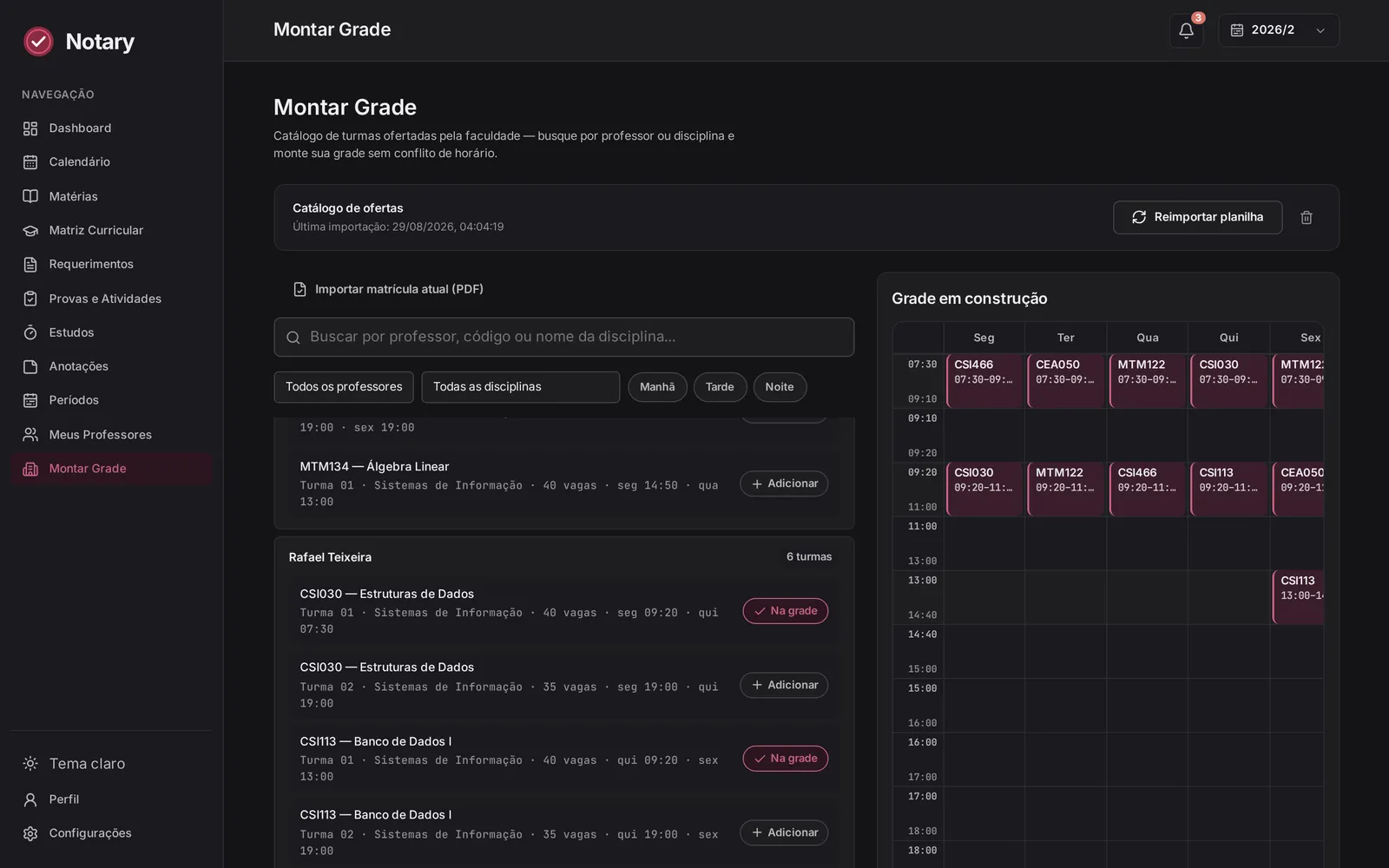
- PDFs and spreadsheets are read in the browser. The app imports the course offering spreadsheet and four university PDFs (enrollment certificate, transcript, syllabus and curriculum matrix). Reading happens on the user's device, and the server receives only structured data.
- Timetable builder with schedule conflict detection, the feature that prevents the most mistakes at enrollment time.
- Per-user isolation in the database. Tables with user data carry the owner of each row, and deleting an account deletes its data in cascade.
- Multi-user authentication with email and password, username and Google sign-in.
- A Pomodoro timer that keeps running in a background tab, working around browser limits.
- Drag-and-drop calendar and plain SVG charts, with no libraries for either.
Verification
The syllabus reader correctly read all 36 classes in a real PDF. This is a test on a single document, not a general accuracy rate.
Current state
Live, with the front end on Vercel, the API on Render and the database on Neon. The code is public on GitHub.